
Maesa Update
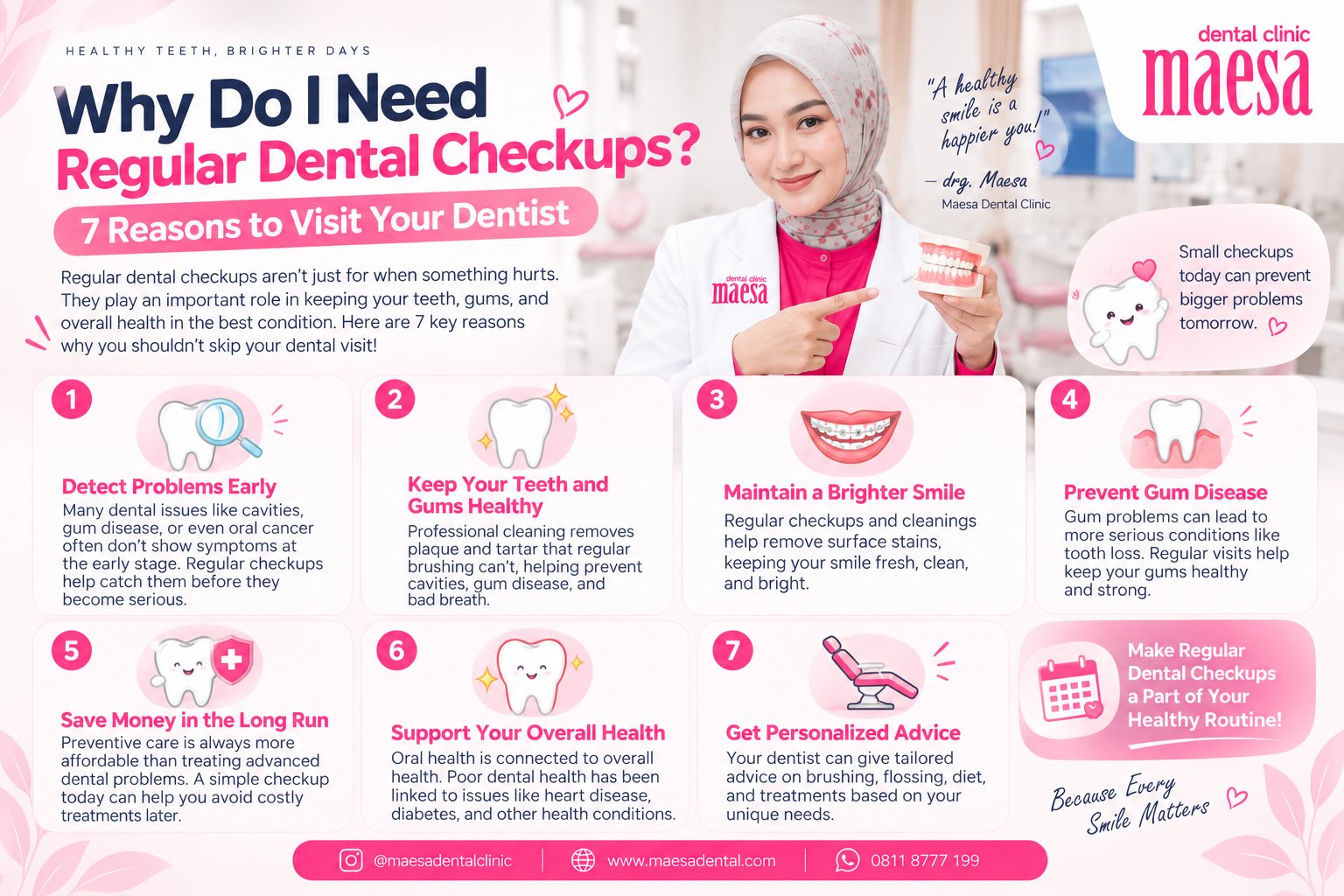
Why Do I Need Regular Dental Checkups? 7 Reasons to Visit Your Dentist
If your teeth feel fine and you are not experiencing any pain, you may wonder, “Why do I need regular dental checkups?”
It is a common question. Many people only schedule a dental appointment when they have a toothache, a broken tooth, or another noticeable problem. However, dental checkups are not only about treating problems after they appear. They are also an important part of preventive oral care.
Some dental problems may develop without causing obvious symptoms in the early stages. Regular checkups give dental professionals an opportunity to examine your teeth and gums, identify potential concerns, and provide recommendations to help maintain your oral health.
What Is a Regular Dental Checkup?
A dental checkup is a routine examination of your teeth, gums, and mouth.
During a checkup, the dental team may ask about any changes or concerns since your previous visit and examine your oral health. Depending on your individual needs, additional examinations such as dental X-rays may also be recommended.
A checkup is different from an emergency dental visit. Instead of waiting until something hurts, routine appointments focus on monitoring your oral health and identifying potential problems early.
7 Reasons Why Regular Dental Checkups Matter
1. They Can Help Detect Problems Early
One of the main purposes of regular dental checkups is early detection.
Cavities, gum disease, and other oral health problems do not always cause noticeable symptoms immediately. A person may feel that everything is fine while an underlying problem is already developing.
Routine examinations can help identify these concerns before they potentially become more complicated to manage.
2. They Help Monitor Your Gum Health
Healthy teeth are only part of good oral health. Your gums and the tissues supporting your teeth also need attention.
Gum disease can cause symptoms such as red or swollen gums, bleeding, tenderness, or changes around the teeth. However, gum disease can also become more serious before a person notices significant symptoms.
Regular dental care can help monitor gum health and identify problems that may require further attention.
3. They Help Prevent Tooth Decay From Getting Worse
Tooth decay is one of the most common oral health problems.
When detected early, dental professionals can assess the condition and discuss appropriate preventive or treatment options. Delaying care may allow a cavity to progress and potentially require more extensive treatment.
This is one reason regular checkups can be useful even when you are not experiencing tooth pain.
4. You Can Get Professional Cleaning When Needed
Brushing and cleaning between your teeth are essential parts of daily oral care. However, plaque can accumulate in areas that are difficult to clean effectively at home and may eventually harden into tartar.
Professional dental cleaning can help remove this buildup and support good oral hygiene.
However, dental cleaning and dental checkups are not necessarily the same thing. A checkup focuses on examining your oral health, while a professional cleaning focuses on removing plaque and tartar buildup.
Depending on your oral health, both may be recommended during your dental visits.
5. You Can Receive Personalized Oral Health Advice
Another benefit of regular dental visits is the opportunity to discuss your daily oral care routine.
You can ask questions about:
- Your brushing technique
- Flossing or interdental cleaning
- Tooth sensitivity
- Dietary habits
- Choosing oral care products
- How often you should have professional cleaning
Oral care recommendations can vary from person to person. The ADA notes that dental professionals may tailor preventive recommendations according to an individual's oral health needs and risk factors.
6. They Can Help You Avoid Waiting Until You Have a Toothache
A toothache is often what finally motivates people to visit the dentist. However, waiting until a problem becomes painful is not always the best approach.
Routine dental visits allow your oral health to be monitored even when you feel completely fine.
The goal is not to visit the dentist because something is already wrong, but to make dental care part of your regular health routine.
7. They Help You Keep Track of Changes Over Time
Your oral health can change as you get older.
Changes in your teeth, gums, dental restorations, oral hygiene habits, medications, or general health may affect your dental needs.
Regular appointments give the dental team an opportunity to compare your current oral health with previous visits and adjust recommendations when necessary.
How Often Should You Have a Dental Checkup?
There is no single schedule that applies to everyone.
You may have heard the recommendation to visit the dentist every six months. However, the appropriate interval can vary depending on your oral health, risk factors, age, and history of dental problems.
For example, some people with good oral health may not need checkups as frequently, while others may benefit from more frequent appointments. The NHS notes that the interval between routine checkups can range from a few months to longer periods depending on an individual's oral health and risk of future problems.
The best approach is to ask your dental professional how often you should have your teeth and gums checked.
Do I Still Need a Dental Checkup If My Teeth Don't Hurt?
Yes, regular checkups can still be useful even when you have no dental pain.
The absence of pain does not necessarily mean that your teeth and gums have no problems. Some oral conditions may not produce noticeable symptoms during their early stages.
For this reason, routine preventive care is different from waiting for a dental emergency.
If you notice changes such as bleeding gums, persistent sensitivity, swelling, a broken tooth, or tooth pain between appointments, you should not wait for your next routine checkup. Contact a dental professional for an appropriate evaluation.
Make Dental Checkups Part of Your Routine
So, why do I need regular dental checkups?
Because taking care of your teeth is not only about treating problems when they hurt. Regular dental visits can help monitor your teeth and gums, detect potential problems earlier, provide personalized oral care guidance, and support long-term oral health.
You do not have to wait until you have a toothache before seeing a dentist. Making routine dental care part of your health routine can help you stay informed about your oral health and address concerns before they become more difficult to manage.
If you would like to have your teeth and gums checked, you can visit Maesa Dental Clinic and consult with our professional dental team.
For more dental health tips and educational content, follow Maesa Dental on Instagram at @maesadental.
References
Centers for Disease Control and Prevention. (2024). About Oral Health. CDC. CDC Oral Health
Centers for Disease Control and Prevention. (2024). Oral Health Tips for Adults. CDC. CDC Oral Health Tips for Adults
Centers for Disease Control and Prevention. (2024). About Periodontal (Gum) Disease. CDC. CDC Gum Disease Information
American Dental Association. Home Oral Care. ADA. ADA Home Oral Care
NHS. Dental Check-ups. NHS Dental Check-ups
Tersambung lebih dari
sekadar janji temu.
Smile Connect dan Mae Care Program adalah layanan pendampingan kesehatan gigi yang personal, hangat, dan profesional.Temui kami di hari terbaik untuk senyummu

Smile Connect
Our expert strives to make each interaction with patients clear, concise, and inviting. Support the important work of Maesa Dental by making a much-needed donation today.
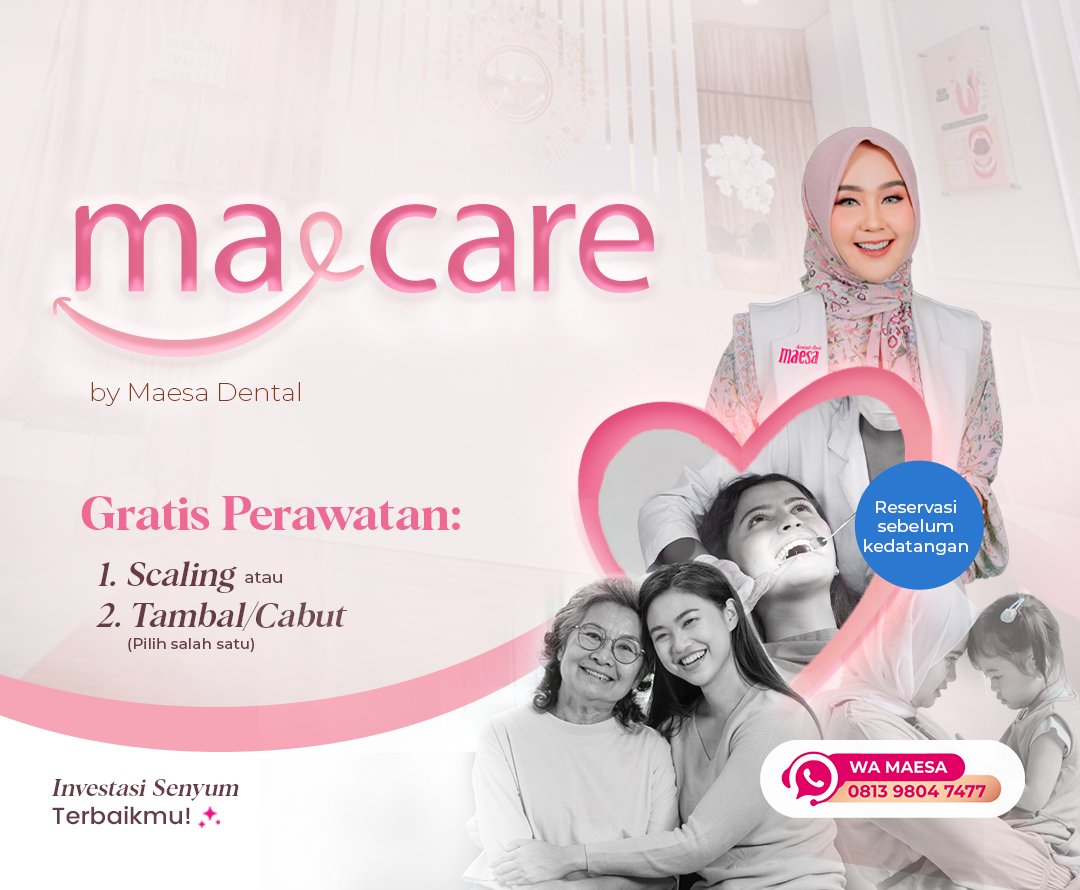
Mae Care
Our expert strives to make each interaction with patients clear, concise, and inviting. Support the important work of Maesa Dental by making a much-needed donation today.
Satiesfied Patients
Kami bangga bisa menjadi bagian dari setiap senyuman sehat yang kamu miliki. Yuk intip cerita dari para pasien Maesa Dental Klinik yang puas dengan layanan kami!

Mario Irwinsyah
Satisfied Patient
"Saya seneng banget perawatan di Maesa Dental Clinic, dokternya ramah, baik, dan yang paling penting...

Moh. Rano Alfath
Satisfied Patient
"Saya operasi gigi bungsu, tindakannya cepat dan tidak sakit sama sekali. Dokternya sangat professional, tempat...

Astrid Wiriadidjaja
Satisfied Patient
"Hasil direct veneer aku sangat memuaskan, Dokternya ramah dan professional, tempatnya juga nyaman banget."

Anya Anjani
Satisfied Patient
"Tempatnya nyaman banget dan bikin betah aslii, hasil perawatannya juga bagus banget aku sukaa, dokternya...

Reynal Abipraya
Satisfied Patient
"Super nyaman dan bersih, dokter & perawatnya juga professional sekali, gak nyesel perawatan di Maesa...
Insurance Partners
Karena kesehatan dan keamanan Anda adalah prioritas kami, kami hadir bersama mitra asuransi terbaik untuk menjaga setiap langkah Anda.














Ghea Youbi
Satisfied Patient"Aku habis perawatan Bleaching, memuaskan bangettt... hasilnya putih banget dan natural, setelah 3 hari jadi...