
Maesa Update
How Long Does a Dental Cleaning Take? A Complete Guide
How Long Does a Dental Cleaning Take? A Complete Guide
If you are planning to visit the dentist for the first time in a while, you may be wondering, “How long does a dental cleaning take?”
Dental cleaning, also known as scaling, is one of the most common preventive dental treatments. It helps remove plaque, tartar, and buildup that cannot always be cleaned effectively through regular brushing at home.
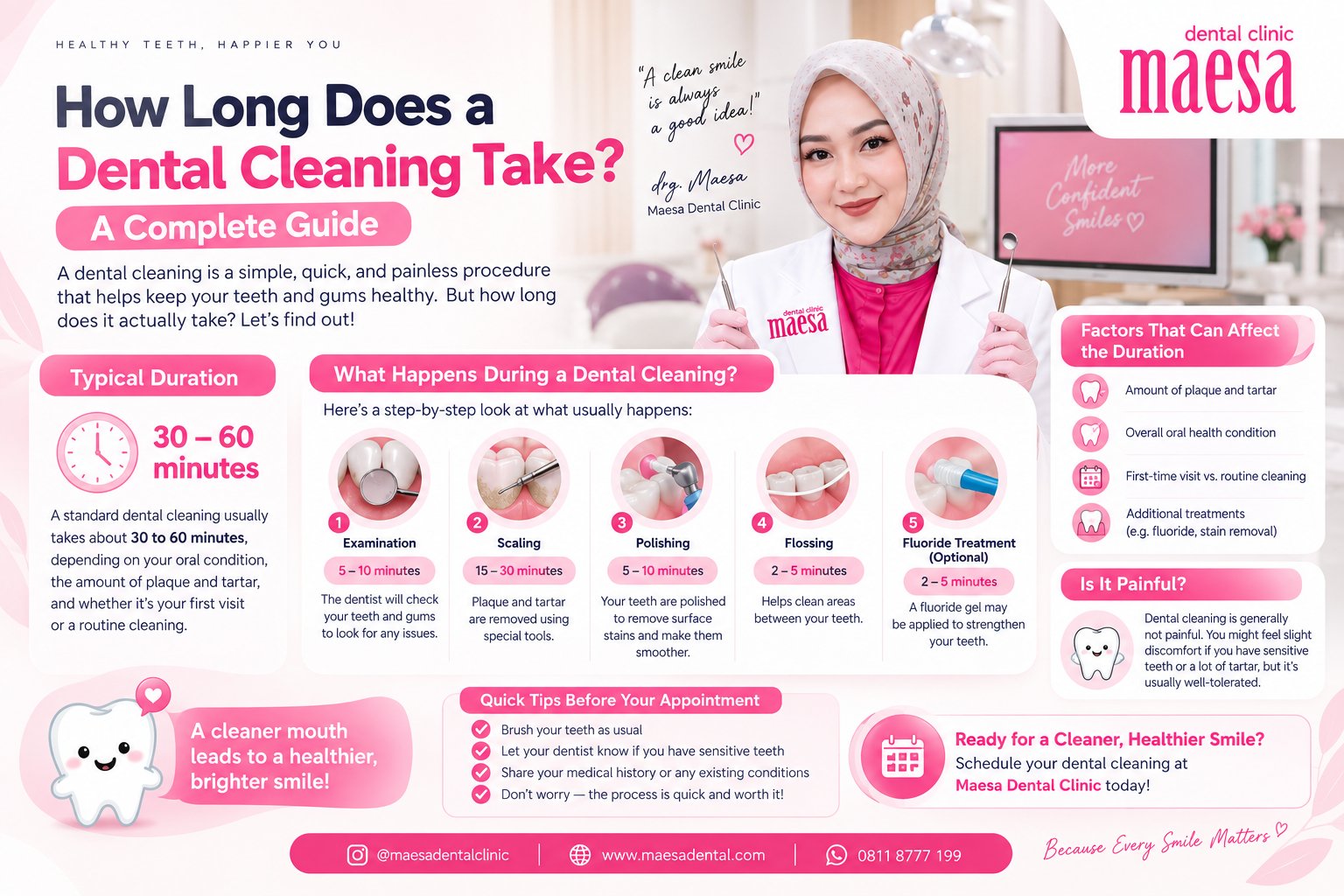
In general, a routine dental cleaning may take around 30 to 60 minutes. However, the exact duration can vary depending on your oral health, the amount of tartar buildup, and the type of cleaning required.
What Is Dental Cleaning?
Dental cleaning is a professional procedure performed to remove plaque and tartar from the teeth and along the gumline.
Plaque is a soft layer of bacteria that forms naturally on the teeth. If it is not removed properly, it can harden into tartar, also known as dental calculus. Unlike plaque, tartar cannot be removed effectively with a regular toothbrush and requires professional dental instruments.
Routine dental cleaning can help maintain oral hygiene and reduce the risk of gum problems, bad breath, and other dental complications.
How Long Does a Dental Cleaning Usually Take?
For many patients, a routine dental cleaning takes approximately 30 to 60 minutes.
However, this is only a general estimate. Some appointments may be shorter, while others can take longer depending on the patient’s condition.
Here are several factors that may affect the duration of a dental cleaning:
1. The Amount of Tartar Buildup
The more tartar accumulated on your teeth, the more time may be needed to remove it thoroughly.
Patients who receive regular dental cleanings may have less buildup, allowing the procedure to be completed relatively quickly. Meanwhile, patients who have not visited the dentist for a long period may require additional time.
2. The Condition of Your Gums
If your gums are swollen, sensitive, or bleeding easily, the dentist may need to work more carefully during the cleaning process.
In some cases, gum inflammation may indicate gingivitis or another periodontal problem. A dental examination may be recommended to determine whether routine cleaning is sufficient or whether further treatment is needed.
3. The Type of Dental Cleaning
Not every dental cleaning procedure is the same.
A routine cleaning is generally intended for patients with manageable plaque and tartar buildup. However, patients with more advanced gum problems may require a deeper cleaning procedure, such as scaling and root planing.
Deep cleaning typically takes longer and may require more than one appointment, depending on the severity of the condition.
4. Your Overall Oral Health
The presence of cavities, crowded teeth, dental restorations, or other oral health concerns may also influence the appointment.
In some cases, the dentist may recommend an additional examination or treatment after the cleaning.
What Happens During a Dental Cleaning?
Although the exact process may vary, a routine dental cleaning generally involves several steps.
Step 1: Dental Examination
The dentist or dental professional may first examine your teeth and gums to assess your oral health.
This step helps identify visible tartar, gum inflammation, cavities, or other conditions that may require attention.
Step 2: Plaque and Tartar Removal
Using specialized dental instruments, the dental professional removes tartar and plaque from the tooth surfaces and along the gumline.
You may feel mild pressure or some sensitivity, especially if there is significant tartar buildup or gum inflammation.
Step 3: Teeth Polishing
After the buildup has been removed, the teeth may be polished to help eliminate remaining surface stains and create a smoother tooth surface.
Polishing can also make it more difficult for plaque to accumulate quickly on rough areas of the teeth.
Step 4: Oral Hygiene Guidance
Before the appointment ends, you may receive recommendations about brushing techniques, flossing, interdental cleaning, and other ways to maintain your oral health at home.
This guidance is important because professional cleaning is most effective when combined with consistent daily oral hygiene.
Is Dental Cleaning Painful?
Many people find routine dental cleaning comfortable, although some patients may experience mild sensitivity or discomfort.
The level of discomfort can depend on:
- The amount of tartar buildup
- Gum inflammation
- Tooth sensitivity
- The condition of the gumline
- The cleaning technique used
If you have sensitive teeth or feel uncomfortable during the procedure, inform the dental professional. They may adjust the approach to make the experience more comfortable.
How Often Should You Get a Dental Cleaning?
The recommended frequency of dental cleaning depends on your oral health and individual risk factors.
For many people, a dental checkup and cleaning every six months may be appropriate. However, patients with gum disease, a history of heavy tartar buildup, or certain medical conditions may need more frequent visits.
Rather than following the same schedule as everyone else, it is better to discuss the appropriate cleaning interval with your dentist.
What Should You Do After Dental Cleaning?
After a dental cleaning, you can usually return to your normal activities. However, your teeth or gums may feel slightly sensitive for a short period, especially if there was considerable tartar buildup.
To help maintain the results of your cleaning:
- Brush your teeth twice a day with fluoride toothpaste.
- Clean between your teeth regularly.
- Limit frequent consumption of sugary foods and drinks.
- Drink enough water throughout the day.
- Avoid smoking or tobacco products.
- Schedule regular dental checkups.
If sensitivity or gum discomfort persists, contact your dental professional for further evaluation.
Is One Dental Cleaning Session Enough?
For patients with mild to moderate plaque and tartar buildup, one routine cleaning appointment may be sufficient.
However, patients with extensive tartar, gum disease, or other dental concerns may require additional treatment or follow-up visits.
The dentist will determine the most appropriate approach after examining your teeth and gums. Therefore, the duration and number of appointments can vary from person to person.
Book Your Dental Cleaning Appointment
So, how long does a dental cleaning take? In many cases, a routine dental cleaning takes approximately 30 to 60 minutes. However, the actual duration depends on your oral health, tartar buildup, gum condition, and the type of treatment required.
Regular dental cleaning is an important part of maintaining healthy teeth and gums. If you have not had a dental cleaning recently, this may be a good time to schedule an appointment.
If you would like to have your teeth checked or receive professional dental cleaning, you can visit Maesa Dental Clinic and consult with our professional dental team.
For more dental health tips and educational content, follow Maesa Dental on Instagram at @maesadental.
Tersambung lebih dari
sekadar janji temu.
Smile Connect dan Mae Care Program adalah layanan pendampingan kesehatan gigi yang personal, hangat, dan profesional.Temui kami di hari terbaik untuk senyummu

Smile Connect
Our expert strives to make each interaction with patients clear, concise, and inviting. Support the important work of Maesa Dental by making a much-needed donation today.

Mae Care
Our expert strives to make each interaction with patients clear, concise, and inviting. Support the important work of Maesa Dental by making a much-needed donation today.
Satiesfied Patients
Kami bangga bisa menjadi bagian dari setiap senyuman sehat yang kamu miliki. Yuk intip cerita dari para pasien Maesa Dental Klinik yang puas dengan layanan kami!

Mario Irwinsyah
Satisfied Patient
"Saya seneng banget perawatan di Maesa Dental Clinic, dokternya ramah, baik, dan yang paling penting...

Moh. Rano Alfath
Satisfied Patient
"Saya operasi gigi bungsu, tindakannya cepat dan tidak sakit sama sekali. Dokternya sangat professional, tempat...

Astrid Wiriadidjaja
Satisfied Patient
"Hasil direct veneer aku sangat memuaskan, Dokternya ramah dan professional, tempatnya juga nyaman banget."

Anya Anjani
Satisfied Patient
"Tempatnya nyaman banget dan bikin betah aslii, hasil perawatannya juga bagus banget aku sukaa, dokternya...

Reynal Abipraya
Satisfied Patient
"Super nyaman dan bersih, dokter & perawatnya juga professional sekali, gak nyesel perawatan di Maesa...
Insurance Partners
Karena kesehatan dan keamanan Anda adalah prioritas kami, kami hadir bersama mitra asuransi terbaik untuk menjaga setiap langkah Anda.
















Ghea Youbi
Satisfied Patient"Aku habis perawatan Bleaching, memuaskan bangettt... hasilnya putih banget dan natural, setelah 3 hari jadi...