
Maesa Update
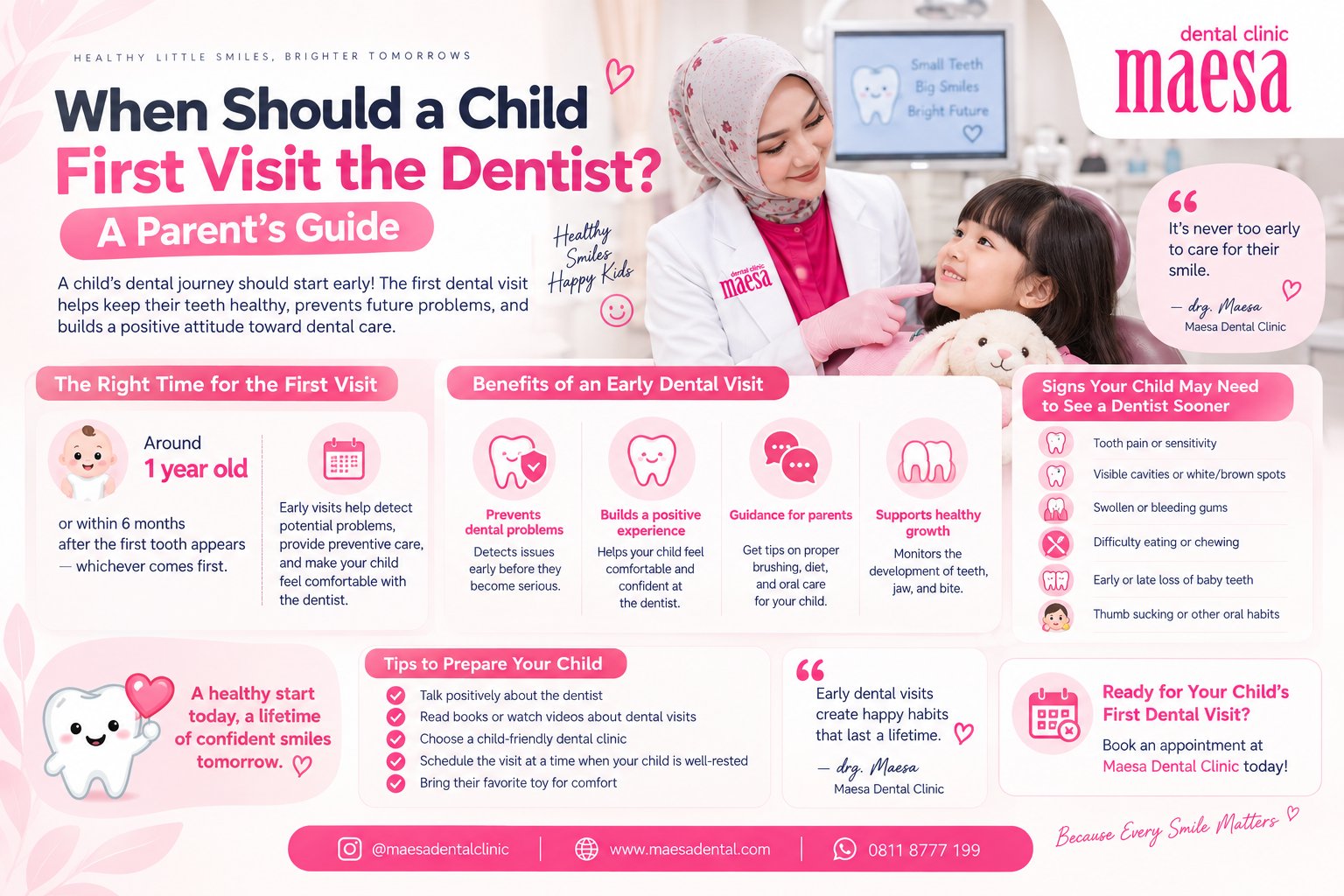
When Should a Child First Visit the Dentist? A Parent’s Guide
Many parents assume that their child does not need to visit the dentist until all of their baby teeth have grown in. Others wait until their child complains about tooth pain or develops a visible cavity.
However, your child’s first dental visit should happen earlier than you might think. According to the American Academy of Pediatric Dentistry and the American Dental Association, children should visit a dentist when their first tooth appears, or no later than their first birthday.
An early dental visit helps parents understand how to care for their child’s teeth and allows dental professionals to identify potential problems before they become more serious.
When Should a Child First Visit the Dentist?
The recommended time for a child’s first dental visit is:
- When the first baby tooth appears
- Within six months after the first tooth erupts
- No later than the child’s first birthday
This recommendation applies even if your child’s teeth appear healthy and there are no obvious dental problems.
Why is the first visit recommended so early? Baby teeth can develop cavities as soon as they emerge. Early dental visits allow parents to receive preventive guidance and help children become familiar with the dental environment from a young age.
Why Is an Early Dental Visit Important?
A first dental visit is not only about checking for cavities. It is also an opportunity to establish healthy habits and understand your child’s individual dental needs.
1. To Detect Early Signs of Tooth Decay
Tooth decay can develop in baby teeth, even when the damage is not immediately visible to parents. During the examination, the dentist can check for early signs of cavities, enamel problems, and other conditions that may affect your child’s oral health.
Identifying these concerns early may help prevent discomfort and more complex dental treatment in the future.
2. To Learn the Right Way to Care for Baby Teeth
Parents may have questions such as:
- When should I start brushing my baby’s teeth?
- How much fluoride toothpaste should I use?
- Is it safe for my child to sleep with a bottle?
- How often should my child visit the dentist?
- What foods and drinks can increase the risk of cavities?
The first appointment is a valuable opportunity to discuss these concerns and receive guidance based on your child’s age and development.
3. To Prevent Dental Problems Before They Begin
Preventive care is one of the main purposes of an early dental visit. The dentist may provide recommendations about brushing, fluoride use, eating habits, pacifiers, thumb sucking, and other factors that can influence dental development.
According to the American Academy of Pediatric Dentistry, establishing a dental home early supports ongoing preventive care and caries-risk assessment.
4. To Help Your Child Feel Comfortable at the Dentist
A child who visits the dentist only when experiencing severe tooth pain may associate dental treatment with fear or discomfort. In contrast, an early visit can be a simple and positive introduction to the dental environment. Your child can become familiar with the dentist, the dental chair, and the process of having their teeth checked.
The first appointment may be relatively short and focused mainly on observation, education, and creating a comfortable experience.
What Happens During a Child’s First Dental Visit?
The first dental appointment may vary depending on the child’s age, cooperation, and oral health. However, it commonly includes several activities.
Oral Examination
The dentist will examine the child’s teeth, gums, and mouth to look for signs of tooth decay, developmental concerns, or other oral health problems. For infants and toddlers, the examination may be performed while the child sits on a parent’s lap or in another comfortable position.
Discussion About Oral Hygiene
Parents may receive instructions on how to clean their child’s teeth and gums at home.
For children with erupted teeth, the dentist may discuss the appropriate toothbrush, fluoride toothpaste, brushing technique, and frequency of brushing.
Review of Feeding and Oral Habits
The dentist may ask about bottle-feeding, breastfeeding, snacks, sugary drinks, pacifier use, or thumb sucking.
These habits can influence the development of cavities and the alignment of growing teeth.
Preventive Recommendations
Depending on the child’s needs, the dentist may recommend preventive measures such as fluoride treatment, dietary adjustments, or a specific follow-up schedule. Not every child will require the same treatment. Recommendations should be based on the child’s individual risk factors and oral health condition.
How Can Parents Prepare Their Child for the First Dental Visit?
Some children may feel nervous when visiting a new place. Parents can help make the experience more comfortable with a few simple steps.
Talk About the Dentist Positively
Use simple and positive language when explaining the visit. Avoid describing the dentist using words that may create fear, such as “pain,” “injection,” or “drill,” especially when these procedures may not be necessary. Instead, explain that the dentist will count and check their teeth to help keep them healthy.
Practice Opening the Mouth
You can make a game out of practicing opening the mouth and showing the teeth. This can help your child become more familiar with what may happen during the examination.
Read Books or Watch Child-Friendly Videos
Books and educational videos about visiting the dentist may help children understand the experience and feel more prepared.
Schedule the Appointment at the Right Time
Try to choose a time when your child is usually well-rested and not hungry. A tired or hungry child may find it more difficult to cooperate during the appointment.
How Often Should Children Visit the Dentist?
After the first visit, the dentist will recommend an appropriate schedule based on your child’s oral health. Many children benefit from dental checkups approximately every six months. However, children with a higher risk of cavities, gum problems, or other dental concerns may need more frequent visits.
The most suitable schedule should be determined according to your child’s individual needs.
What If Your Child Has Not Visited the Dentist Yet?
If your child is already older than one year and has never visited the dentist, there is no need to feel guilty or delay the appointment further. It is still beneficial to schedule a dental examination as soon as possible. The dentist can assess your child’s current oral health and help establish a preventive care routine moving forward.
You should also arrange a dental visit promptly if your child experiences:
- Toothache
- Visible cavities
- Dark or white spots on the teeth
- Swollen gums
- Bleeding gums
- Sensitivity when eating or drinking
- Difficulty chewing
- Dental trauma or a broken tooth
Do not wait for severe pain before seeking professional advice.
Start Your Child’s Dental Care Early
So, when should a child first visit the dentist? The recommended time is when the first tooth appears, or no later than the child’s first birthday. An early dental visit helps detect potential problems, teaches parents how to care for baby teeth, and introduces children to dental care in a positive way. Remember, baby teeth are temporary, but the habits developed during childhood can influence oral health for many years to come.
If you would like to schedule a dental examination for your child, you can visit Maesa Dental Clinic and consult with our professional dental team.
For more dental health tips and educational content, follow Maesa Dental on Instagram at @maesadental.
References
American Academy of Pediatric Dentistry. FAQ: When Should I Take My Child to the Dentist for the First Check-Up? Available at: https://www.aapd.org/resources/parent/faq/
American Dental Association. Your Baby’s First Dental Visit. MouthHealthy. Available at: https://www.mouthhealthy.org/life-stages/babies-and-kids/first-dental-visit-for-baby
American Academy of Pediatrics. Maintaining and Improving the Oral Health of Young Children. Pediatrics. Available at: https://publications.aap.org/pediatrics/article/151/1/e2022060417/190307/Maintaining-and-Improving-the-Oral-Health-of-Young
American Academy of Pediatric Dentistry. Policy on Early Childhood Caries: Consequences and Preventive Strategies. Available at: https://www.aapd.org/research/oral-health-policies--recommendations/early-childhood-caries-classifications-consequences-and-preventive-strategies/
Tersambung lebih dari
sekadar janji temu.
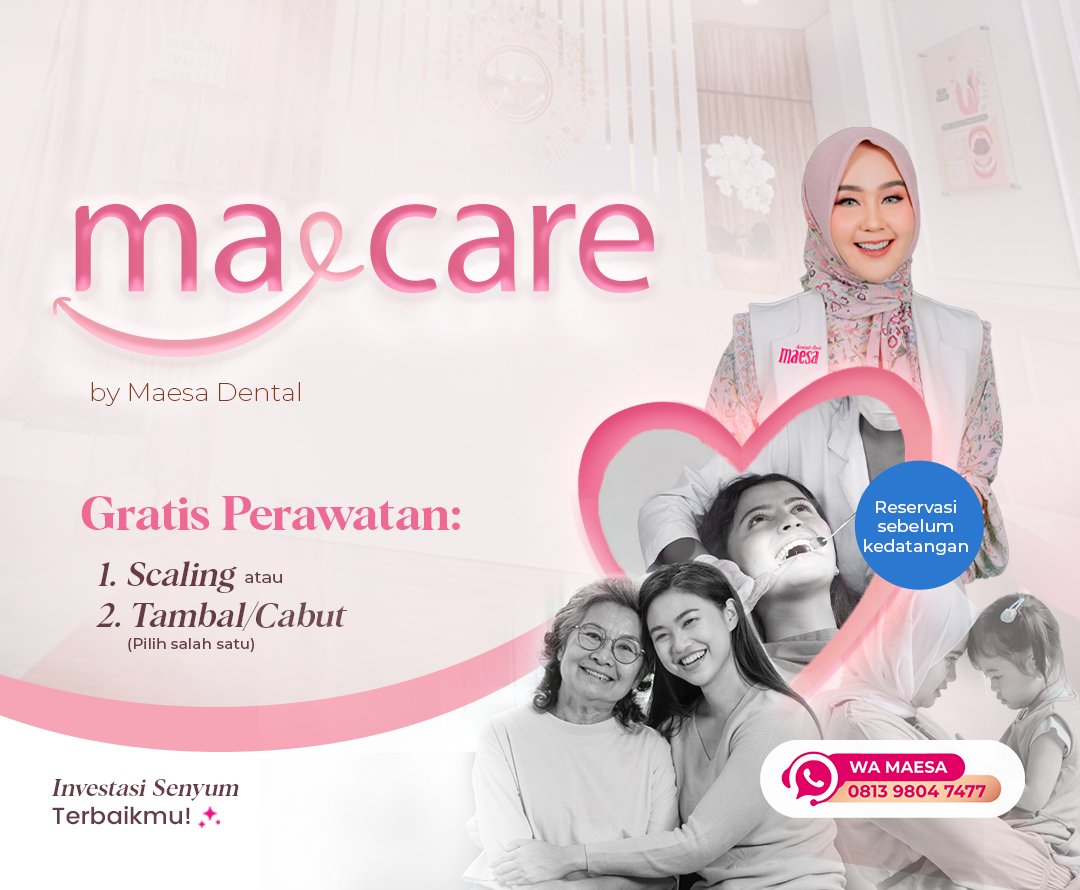
Smile Connect dan Mae Care Program adalah layanan pendampingan kesehatan gigi yang personal, hangat, dan profesional.Temui kami di hari terbaik untuk senyummu

Smile Connect
Our expert strives to make each interaction with patients clear, concise, and inviting. Support the important work of Maesa Dental by making a much-needed donation today.
Mae Care
Our expert strives to make each interaction with patients clear, concise, and inviting. Support the important work of Maesa Dental by making a much-needed donation today.
Satiesfied Patients
Kami bangga bisa menjadi bagian dari setiap senyuman sehat yang kamu miliki. Yuk intip cerita dari para pasien Maesa Dental Klinik yang puas dengan layanan kami!

Mario Irwinsyah
Satisfied Patient
"Saya seneng banget perawatan di Maesa Dental Clinic, dokternya ramah, baik, dan yang paling penting...

Moh. Rano Alfath
Satisfied Patient
"Saya operasi gigi bungsu, tindakannya cepat dan tidak sakit sama sekali. Dokternya sangat professional, tempat...

Astrid Wiriadidjaja
Satisfied Patient
"Hasil direct veneer aku sangat memuaskan, Dokternya ramah dan professional, tempatnya juga nyaman banget."

Anya Anjani
Satisfied Patient
"Tempatnya nyaman banget dan bikin betah aslii, hasil perawatannya juga bagus banget aku sukaa, dokternya...

Reynal Abipraya
Satisfied Patient
"Super nyaman dan bersih, dokter & perawatnya juga professional sekali, gak nyesel perawatan di Maesa...
Insurance Partners
Karena kesehatan dan keamanan Anda adalah prioritas kami, kami hadir bersama mitra asuransi terbaik untuk menjaga setiap langkah Anda.
















Ghea Youbi
Satisfied Patient"Aku habis perawatan Bleaching, memuaskan bangettt... hasilnya putih banget dan natural, setelah 3 hari jadi...